Enzyme Supplier for Rice Syrup Production
Rice syrup factories need more than enzymes on a specification sheet. They need stable slurry handling, predictable conversion, clean filtration, and a supplier who understands what happens when broken rice, starch load, viscosity, temperature, and batch timing do not behave perfectly.
Komeva supplies enzyme solutions for rice syrup production with a practical stack built around liquefaction, saccharification, and conversion efficiency. Our role is straightforward: help your plant convert rice starch into consistent syrup with fewer processing surprises.
Enzyme systems for broken rice slurry conversion
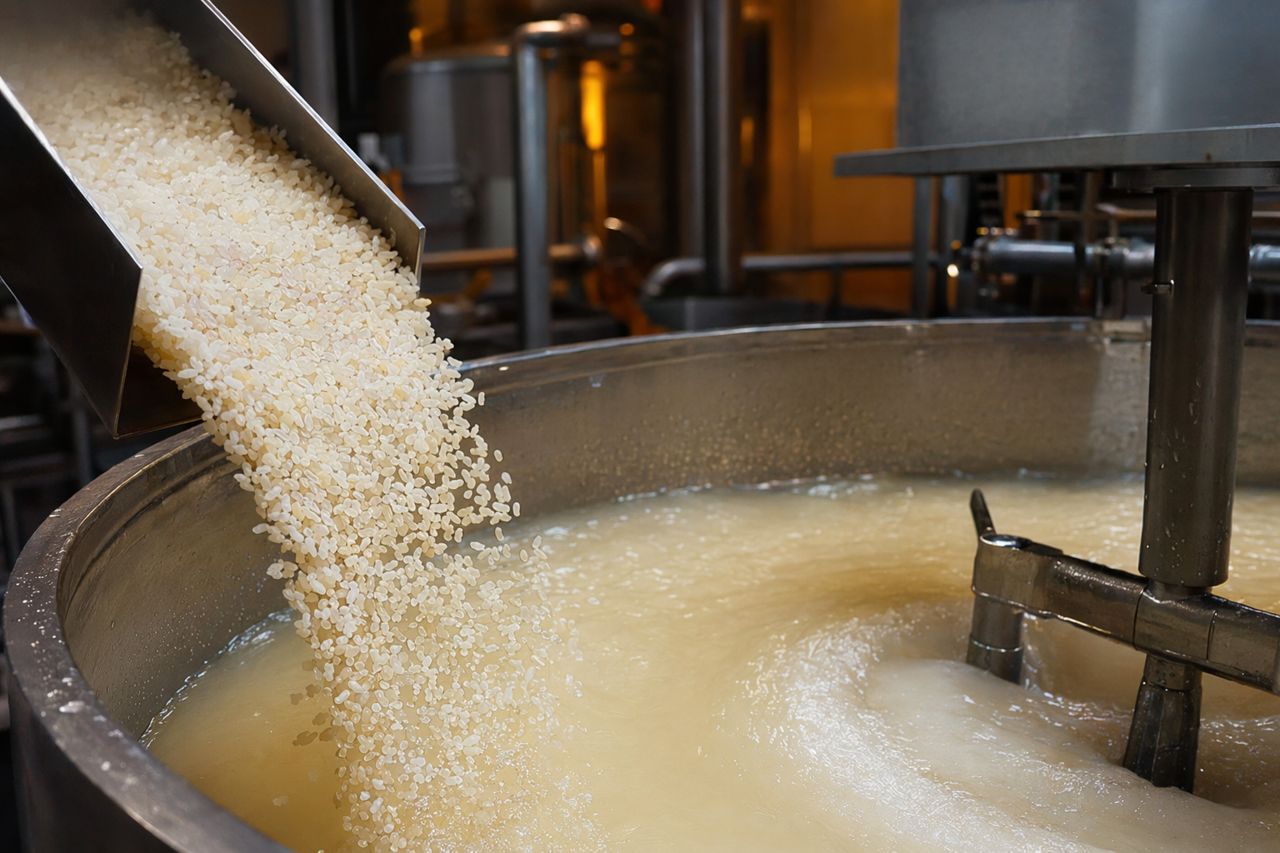
Rice syrup production starts with a variable raw material. Broken rice quality, starch accessibility, slurry solids, and process discipline all influence how the batch moves through the plant.
Komeva supports rice syrup factories with enzyme systems designed around three core conversion steps:
- Alpha amylase for liquefaction — reduces starch slurry viscosity and improves pumpability before downstream conversion.
- Glucoamylase for saccharification — drives starch hydrolysate toward fermentable sugars and target sweetness profiles.
- Pullulanase for higher conversion efficiency — supports debranching, helping improve conversion and reduce residual dextrin load.
The result is a more controlled process window from slurry preparation to syrup finishing.
Built for plant-floor priorities
A rice syrup plant does not run on laboratory language. It runs on flow, holding time, filtration rate, evaporator behavior, batch repeatability, and finished syrup consistency.
Komeva focuses on enzyme performance where plant managers actually see the impact:
- Viscosity control during rice starch liquefaction
- More stable saccharification behavior across batches
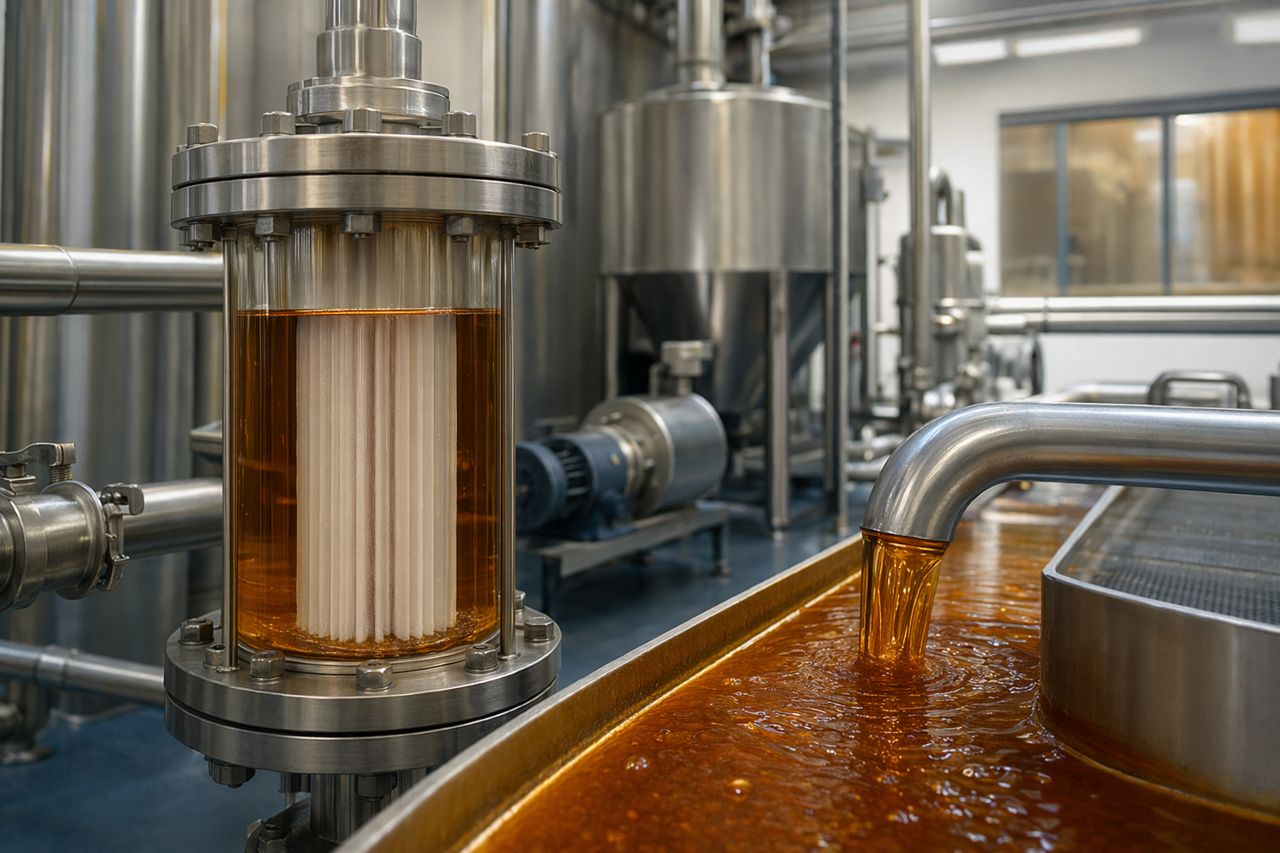
- Cleaner filtration and separation performance
- Reduced risk of slow or incomplete conversion
- Improved syrup clarity and processability
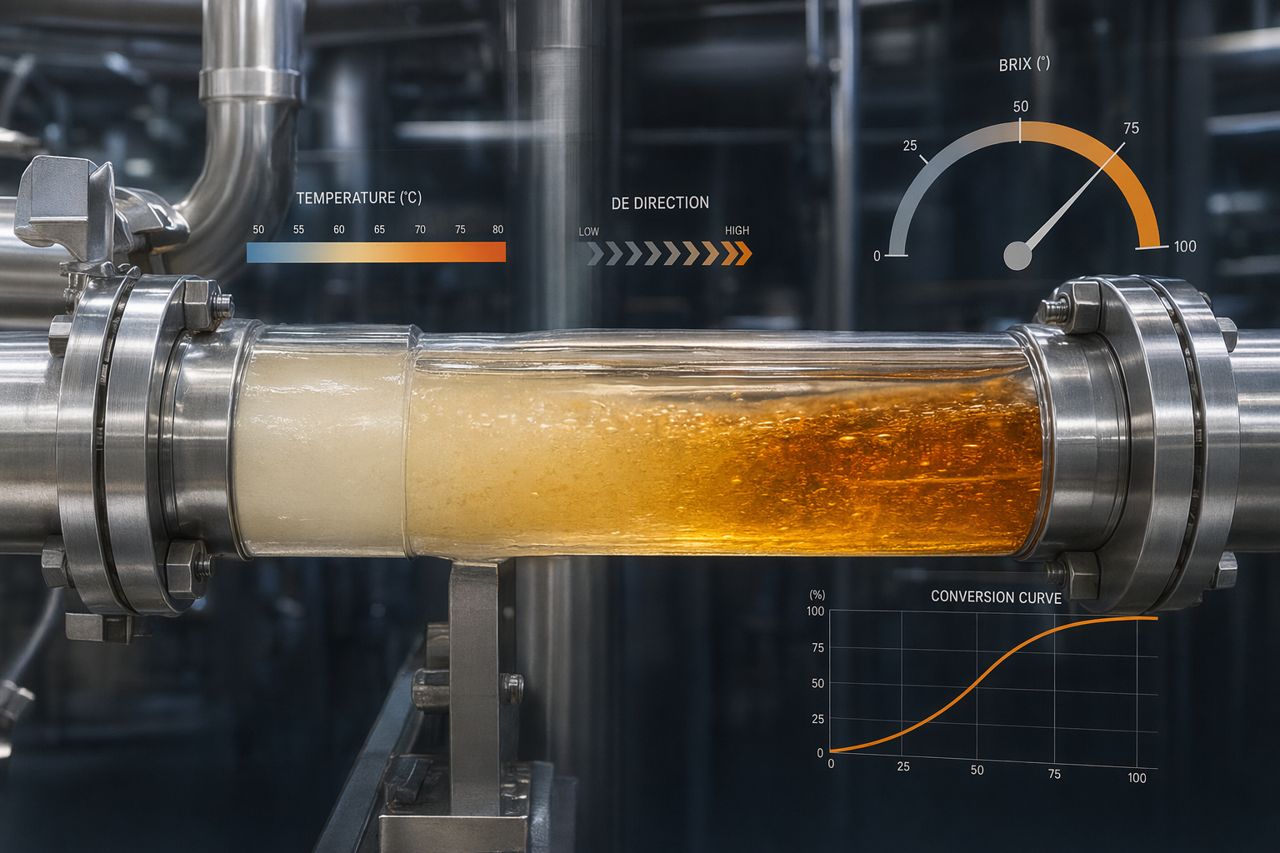
- Better consistency in Brix, DE direction, and sweetness profile
- Lower downtime caused by difficult slurry or sticky intermediate streams
Alpha amylase for reliable liquefaction
Liquefaction sets the tone for the rest of the process. If the rice slurry remains too thick, every downstream step becomes harder: pumping, mixing, heat transfer, filtration, and saccharification.
Komeva alpha amylase solutions help break down gelatinized rice starch into lower-viscosity dextrins. This supports smoother handling and prepares the material for glucoamylase-driven saccharification.
Practical benefits
- Faster reduction of heavy slurry viscosity
- Better mixing and heat transfer behavior
- More consistent feed into saccharification
- Reduced pressure stress in transfer lines and filtration stages
- Improved batch-to-batch handling stability
Glucoamylase for saccharification and sweetness development
After liquefaction, glucoamylase converts dextrins into glucose-rich syrup profiles. For rice syrup factories, this step affects conversion progress, sweetness, downstream concentration behavior, and final syrup quality.
Komeva helps plants select glucoamylase solutions that fit their target syrup profile and process timing. The aim is controlled saccharification, not trial-and-error correction at the end of the batch.
Practical benefits
- Reliable conversion toward target sugar profile
- More predictable saccharification curves
- Better alignment with syrup sweetness and solids targets
- Reduced risk of residual starch or heavy dextrin carryover
- Support for consistent downstream evaporation and finishing
Pullulanase for higher conversion efficiency
Rice starch contains branched structures that can limit conversion if the enzyme system relies only on basic hydrolysis. Pullulanase helps debranch these structures, making more starch fragments accessible for glucoamylase action.
For plants targeting cleaner conversion and improved syrup consistency, pullulanase can be a valuable part of the enzyme stack.
Practical benefits
- Higher conversion efficiency from rice starch feedstock
- Reduced residual dextrin impact
- Cleaner syrup profiles
- Improved saccharification support
- Better use of raw material value
Process support for rice syrup factories
Komeva does not treat enzyme supply as a one-time shipment. Rice syrup production depends on process fit, and process fit depends on the realities of your plant.
We can help review:
- Raw material type and broken rice quality
- Slurry solids and cooking behavior
- Liquefaction and saccharification sequence
- Temperature and pH operating windows
- Holding time and batch rhythm
- Filtration bottlenecks
- Syrup profile targets
- Conversion stability and yield trends
Our technical approach is direct: identify where the enzyme system can remove friction from your process, then recommend a practical supply plan.
Where Komeva fits in your production line
A typical rice syrup enzyme program may support:
- Rice slurry preparation — improving starch accessibility through controlled cooking and mixing.
- Liquefaction — using alpha amylase to reduce viscosity and create a manageable dextrin stream.
- Saccharification — applying glucoamylase to develop the required sugar profile.
- Debranching support — using pullulanase where higher conversion and cleaner profiles are required.
- Filtration and finishing — supporting smoother separation, concentration, and syrup standardization.
Why rice syrup producers choose Komeva
Komeva is an enzyme supplier for rice syrup production focused on commercial reliability, process clarity, and technical follow-through.
You get:
- A supplier who understands rice starch conversion
- Practical enzyme stack recommendations
- Support for viscosity, filtration, and batch consistency issues
- Commercially realistic supply planning
- Clear communication with plant and procurement teams
- Enzyme solutions aligned with real production targets
Request a quote
If you are producing rice syrup from broken rice, rice flour, or rice starch feedstock, Komeva can help match the right enzyme system to your plant conditions and syrup target.
Use the on-site form to request a quote. Share your raw material, process stage, target syrup profile, current bottleneck, and expected purchasing volume. Komeva will respond with a practical recommendation for your production line.