How Broken Rice Quality Changes Syrup Yield, Color, and Filtration Load
Broken rice can be an efficient raw material for syrup production, but it is not a neutral input. Kernel size distribution, bran carryover, chalkiness, aged stock, moisture variation, and foreign starch contamination can all change how a batch cooks, liquefies, filters, and finishes.
For a rice syrup factory, these shifts show up in practical terms: inconsistent conversion, heavier filtration load, darker color, unstable viscosity, slower throughput, and more operator intervention.
Komeva supports processors that need enzyme systems matched to real plant conditions — not ideal lab samples. As an enzyme supplier for rice syrup production, we focus on predictable liquefaction, controlled saccharification, stable flow behavior, and technical support that fits factory routines.
Why broken rice quality matters before enzymes are even added
Broken rice is often chosen for cost and availability, but its quality profile can vary significantly between suppliers, crop seasons, and storage conditions.
Key quality factors include:
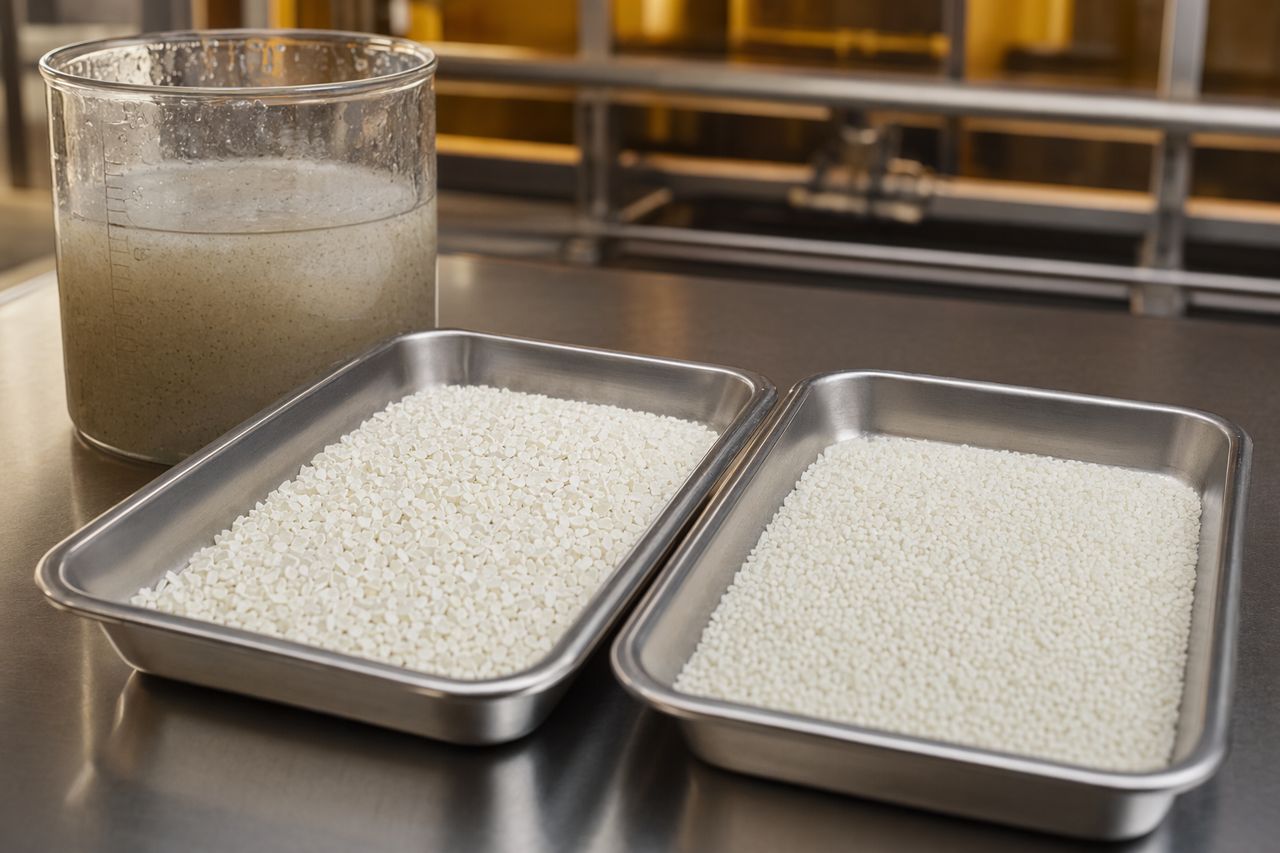
- Particle size spread: Fine particles hydrate quickly and may thicken faster during cooking, while larger fragments can remain under-processed.
- Bran and surface impurities: Higher bran carryover can contribute to color development, off-notes, and filtration drag.
- Moisture inconsistency: Uneven moisture affects milling, slurry concentration, and gelatinization behavior.
- Aged or heat-damaged rice: Storage stress can change starch behavior and increase color risk during processing.
- Chalky or immature kernels: These may break down differently and create unpredictable solids loading.
- Mixed varieties: Different amylose profiles can affect viscosity, conversion rate, and final syrup texture.
The enzyme program can help stabilize the process, but it cannot fully compensate for uncontrolled raw material variation. The best results come from matching raw material grading, slurry preparation, and enzyme selection together.
The first impact: slurry viscosity and liquefaction behavior
In rice syrup production, viscosity control is one of the earliest indicators of whether the batch is behaving well.
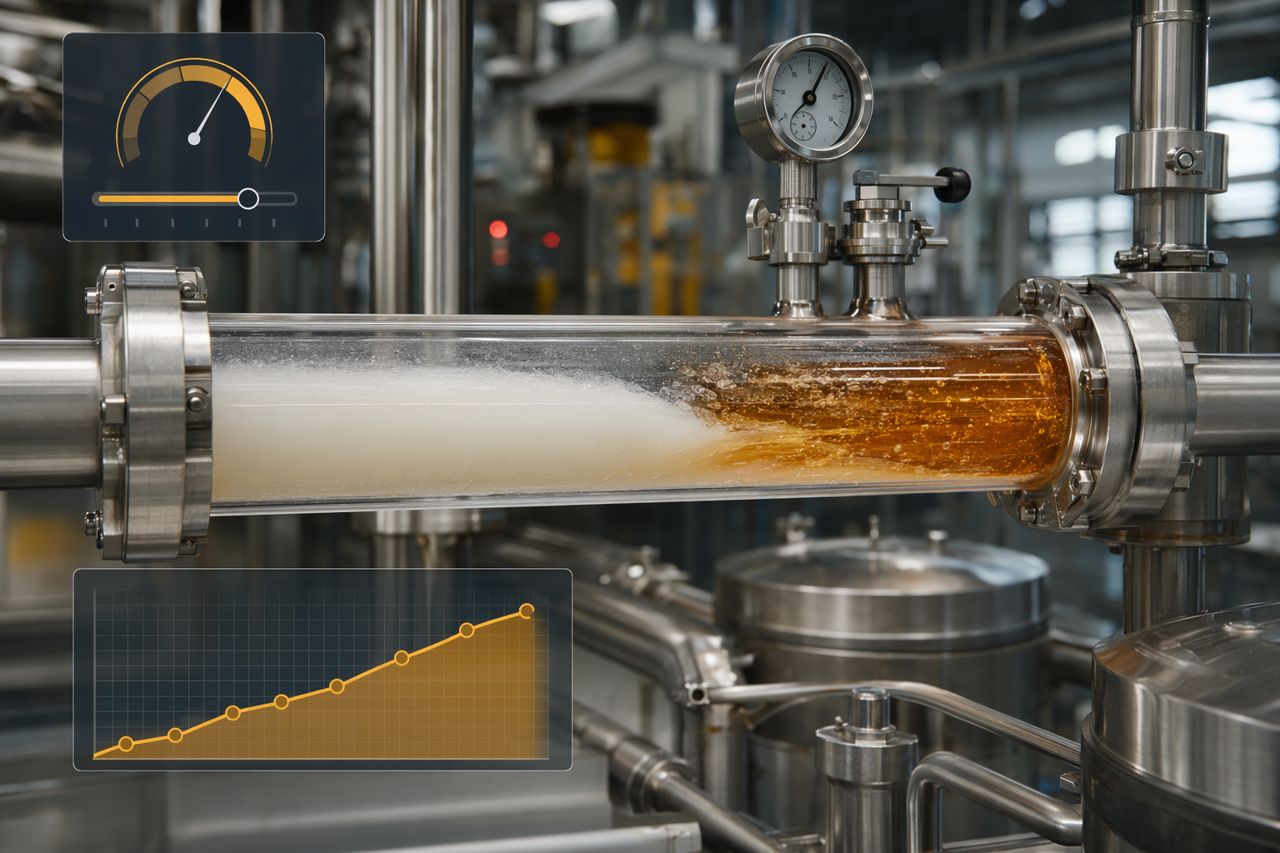
When broken rice contains too many fines, damaged starch, or uneven particle sizes, the slurry may thicken quickly during heating. This can create several plant-floor problems:
- More difficult agitation
- Uneven heat transfer
- Higher pumping load
- Greater risk of localized overcooking
- Slower transfer between process stages
- Inconsistent liquefaction from batch to batch
A well-selected liquefaction enzyme helps reduce viscosity at the right point in the process, allowing the slurry to move smoothly through cooking, holding, and transfer steps. The commercial value is not just conversion; it is controllable flow.
For plant managers, this means fewer emergency adjustments, less downtime from handling thick slurry, and a more stable base for saccharification.
The second impact: syrup yield and extractable solids
Broken rice quality directly affects how much usable syrup can be recovered from each batch.
Higher-quality broken rice generally offers cleaner starch availability and more predictable conversion. Lower-quality material may contain more non-starch solids, bran, hull fragments, heat-damaged starch, or inconsistent moisture. These reduce effective extractable solids and can increase losses into filter cake or clarification waste.
Yield loss often appears in subtle ways:
- Lower recovered syrup volume at target solids
- More solids trapped during separation
- Higher dilution demand to manage viscosity
- Longer processing time to reach target profile
- More batch-to-batch variation in finished syrup
An optimized enzyme program can improve starch breakdown and make solids recovery more consistent. However, enzyme choice should be aligned with the factory’s actual broken rice quality range, not just a single sample.
Komeva helps rice syrup producers evaluate these process realities and select enzyme solutions that support stable commercial yield.
The third impact: color development
Color is one of the most visible outcomes of raw material quality. Broken rice with more bran, dust, aged kernels, or heat-stressed material may produce darker syrup or higher color variability.
Color can be affected by:
- Bran and lipid residues
- Fine dust and surface contaminants
- Excessive thermal exposure caused by poor flow
- Long holding times
- Inconsistent conversion that extends processing
- Poor clarification efficiency
Enzymes do not act as color removers, but they can help reduce conditions that contribute to color formation. When liquefaction is efficient and viscosity is controlled, the process can move with less thermal stress and fewer prolonged corrections.
For factories selling syrup into food, beverage, fermentation, or ingredient applications, color consistency can be as important as yield. A stable enzyme system helps protect the process window that keeps syrup appearance within specification.
The fourth impact: filtration load and clarification pressure
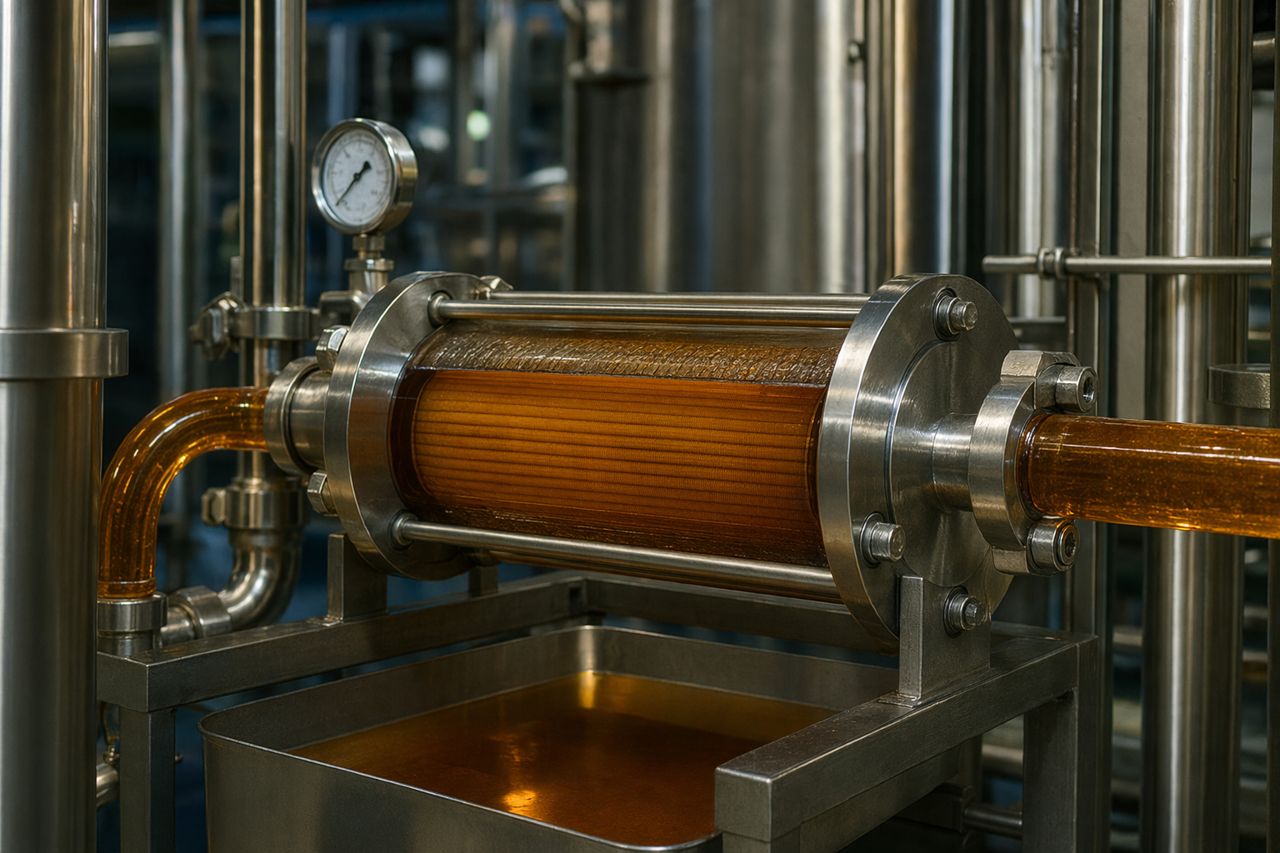
Filtration issues are often blamed on the filter itself, but the problem may begin upstream with raw material quality and starch conversion.
Poor-quality broken rice can increase filtration load through:
- Higher insoluble solids
- Bran and fiber carryover
- Incomplete starch breakdown
- Gel-like residues from uneven liquefaction
- Fine suspended particles that blind filter media
- Variable viscosity entering clarification
When filtration slows, the commercial cost is immediate. Throughput drops, operators spend more time correcting flow, filter media consumption may rise, and batch scheduling becomes less predictable.
A properly matched liquefaction and saccharification approach helps reduce residual starch behavior and supports cleaner separation. This does not eliminate the need for good raw material screening and solids management, but it can make downstream filtration more stable.
The objective is simple: keep syrup moving and reduce the number of process surprises between conversion and finishing.
Practical checks for rice syrup factories using broken rice
Factories do not need to overcomplicate incoming quality control. A few consistent checks can help predict processing behavior before the batch enters the cooker.
Raw material checks
- Inspect for bran, husk fragments, stones, and dust.
- Track supplier and lot history against syrup yield.
- Monitor moisture variation between deliveries.
- Watch for aged, yellowed, or heat-stressed rice.
- Compare particle size distribution and fines content.
- Record odor changes that may indicate poor storage.
Process checks
- Track slurry viscosity trends during heating and liquefaction.
- Note pump load, agitation difficulty, and transfer delays.
- Compare filtration time by lot.
- Measure finished syrup color by batch history.
- Record dilution adjustments and unexpected holding time.
- Link enzyme performance data to actual rice quality data.
The goal is not paperwork for its own sake. The goal is a usable operating picture that helps procurement, production, and technical teams make better decisions.
Where enzyme selection makes the difference
For rice syrup production, enzyme selection should support the specific commercial outcome the factory needs. That may be higher recovered solids, lower viscosity, more stable DE development, faster filtration, better color control, or reduced batch variability.
A practical enzyme supplier should help answer questions such as:
- Is the current liquefaction step reducing viscosity early enough?
- Are filtration issues caused by raw material, conversion, or process timing?
- Does the enzyme program tolerate seasonal rice quality changes?
- Are operators adding water to manage viscosity and losing concentration efficiency?
- Is syrup color drifting because batches are exposed to heat for too long?
- Can the plant reduce correction time while maintaining target syrup profile?
Komeva works with rice syrup factories to connect enzyme choice with plant-floor results. We focus on stable conversion behavior, predictable syrup handling, and responsive technical support.
A practical approach to improving yield consistency
If broken rice quality is variable, the solution is usually a combination of controls rather than a single change.
A strong improvement plan may include:
- Segmenting raw material lots by quality and expected process behavior.
- Reducing extreme fines and impurities before slurry preparation.
- Standardizing slurry solids and hydration routines to reduce viscosity swings.
- Selecting enzymes for robust liquefaction under real factory conditions.
- Aligning saccharification targets with syrup specification and downstream use.
- Tracking filtration behavior as a key performance indicator, not just an end-stage problem.
- Reviewing batch data with the enzyme supplier to refine the process window.
This approach helps factories move away from reactive troubleshooting and toward repeatable production.
What Komeva brings to rice syrup producers
Komeva supplies enzyme solutions for rice syrup factories that need dependable batch performance and practical technical support.
Our value is built around:
- Enzyme selection for rice starch liquefaction and saccharification
- Support for viscosity control and smoother processing
- Guidance for yield stability across broken rice quality variation
- Process-focused troubleshooting for filtration and color issues
- Commercially practical recommendations for plant teams
- Reliable supply for ongoing production requirements
We understand that a syrup factory is judged by throughput, consistency, cost control, and customer specification. Enzymes should support those goals clearly.
Request a quote for rice syrup enzyme support
If broken rice variability is affecting your syrup yield, color, viscosity, or filtration load, Komeva can help you review the process and identify the right enzyme approach.
Request a quote through the on-site contact form and share your raw material type, process stage, syrup target, and current production challenge. Our team will respond with practical next steps for your rice syrup operation.